

The Rise of Tethered Drones in Modern Surveillance Applications
Tethered drones are revolutionizing surveillance operations by providing unlimited flight time and enhanced security through their physical connection to ground stations. The global aerial surveillance market is projected to reach $7.8 billion by 2025, with tethered systems driving significant growth according to recent industry reports. These innovative platforms, led by companies like Elistair, offer continuous monitoring capabilities that traditional battery-powered drones simply cannot match. How will this persistent aerial presence transform our approach to security and surveillance in the coming years?
How Tethered Drones Are Revolutionizing Aerial Monitoring Operations
The landscape of aerial surveillance has undergone a dramatic transformation with the introduction of tethered drone technology. Unlike their battery-powered counterparts, these systems eliminate the fundamental limitation that has plagued traditional drone operations: limited flight time.
Tethered drones deliver continuous 24/7 monitoring capabilities that were previously impossible to achieve. The direct power connection through the tether cable removes battery anxiety entirely, allowing security teams to maintain persistent aerial coverage over critical areas without interruption. This represents a paradigm shift from intermittent surveillance windows to truly continuous monitoring operations.
The stability advantages are equally revolutionary. The tether connection provides enhanced resistance to wind and weather conditions, ensuring consistent video quality even during adverse weather. This stability translates directly into more reliable data collection and clearer visual intelligence for operators.
Real-time data transmission capabilities have reached new heights with tethered systems. The direct cable connection enables high-bandwidth data transfer without the latency issues common in wireless communications, allowing for instant decision-making based on live aerial intelligence.
Technical Advantages Over Traditional Unmanned Aerial Vehicles
Tethered drone systems represent a significant technological leap forward, addressing the fundamental limitations that have constrained traditional unmanned aerial vehicles for decades. These innovative platforms deliver continuous operation capabilities that transform surveillance and monitoring applications across multiple industries.
The technical superiority of tethered systems becomes evident when comparing operational parameters with their battery-powered counterparts:
- Unlimited flight time through continuous power supply, eliminating the 20-45 minute flight restrictions of traditional drones
- Consistent power delivery ensuring stable performance of high-energy sensors, cameras, and communication equipment throughout extended missions
- Enhanced payload capacity supporting heavier professional-grade equipment without battery weight constraints
- Superior weather resistance with robust tethered systems designed to operate in challenging environmental conditions
- Enhanced security protocols through physical connection that prevents signal jamming and unauthorized control interference
- Reduced operational costs by eliminating frequent battery replacements, charging downtime, and multiple drone rotations for continuous coverage
These advantages position tethered drones as the preferred solution for critical applications requiring reliable persistence and uninterrupted monitoring capabilities.
Performance Specifications and Operational Capabilities
Modern tethered drone systems deliver exceptional operational performance that surpasses traditional battery-powered units in critical surveillance applications. These platforms typically achieve unlimited flight time through continuous power supply via reinforced cables, eliminating the 20-30 minute battery limitations that plague conventional drones.
Professional systems feature high-resolution cameras capable of 4K Ultra HD recording with optical zoom ranges extending from 10x to 40x magnification. Advanced models incorporate dual-sensor payloads combining visible light and thermal infrared imaging, providing comprehensive surveillance capabilities in all lighting conditions. Night vision performance reaches distances of 2-5 kilometers depending on atmospheric conditions and target characteristics.
Weather resistance specifications typically include IP65 or IP67 ratings, ensuring reliable operation in rain, snow, and extreme temperatures ranging from -20°C to +50°C. Deployment time averages 2-5 minutes for trained operators, while operational altitude reaches 100-150 meters with lateral movement radius limited by tether length, usually spanning 50-100 meters from the ground station.
Communication range extends well beyond visual line of sight through the tethered connection, supporting real-time data transmission and remote piloting capabilities that maintain consistent performance regardless of RF interference or electronic countermeasures.
Your Questions About Tethered Drone Technology
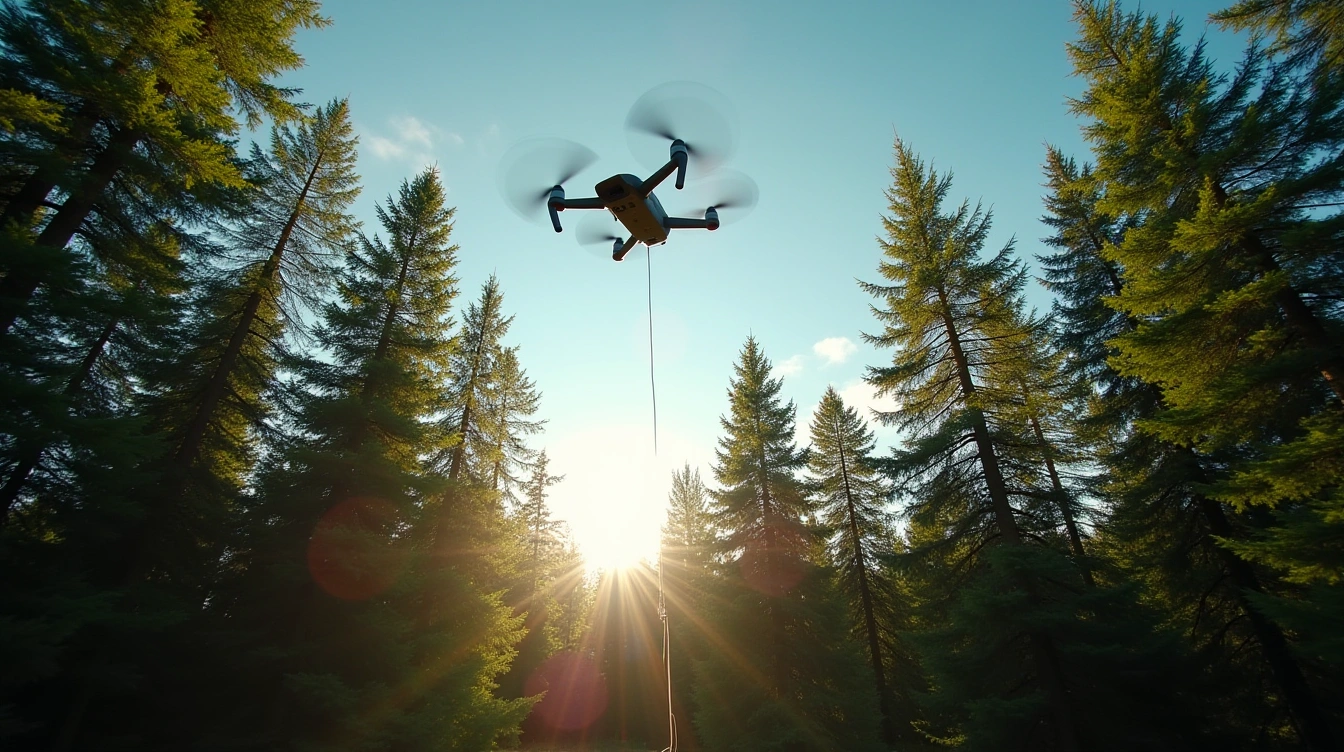
What are the advantages of tethered drones over traditional drones?
Tethered drones offer unlimited flight time through continuous power supply, enhanced security with physical connection, real-time data transmission, and superior stability for critical surveillance missions.
How long can a tethered drone stay in the air for surveillance?
Tethered drones can operate indefinitely as long as ground power remains available. Most systems sustain 24/7 operations, limited only by maintenance requirements and weather conditions.
What is the maximum range of a tethered drone system?
Modern tethered systems typically reach 100-150 meters in height with specialized cables extending up to 400 meters. Range depends on cable weight, power requirements, and specific mission needs.
Are tethered drones better for security and surveillance applications?
Yes, tethered drones excel in persistent surveillance scenarios. They eliminate battery anxiety, prevent hijacking through physical connection, and provide continuous monitoring for perimeter security and crowd management.
How much does a professional tethered drone system cost?
Professional tethered drone systems range from $15,000 to $100,000+ depending on specifications, payload capacity, cable length, and integrated surveillance equipment for enterprise applications.